


The Double-Edged Sword of Financialization in South Africa
In South Africa’s dynamic economy, the financial sector has grown into a powerhouse, contributing significantly to GDP while shaping the nation’s growth trajectory. A 2023 study by Mahlatse Mabeba, “Financialization and Economic Growth Nexus in South Africa,” dives deep into this phenomenon, revealing how financialization—defined as the increasing dominance of financial markets, institutions, and motives-drives economic expansion but also exacerbates inequality. At the Financial Sector Campaign Coalition (FSCC), we see this as a critical issue in our fight for a fairer financial system that serves all South Africans, not just the elite.
What is Financialization?
Financialization refers to the growing share of the financial sector in the overall economy. In South Africa, this shift has been pronounced since the democratic transition in 1994. The study highlights how post-apartheid reforms liberalized financial markets, attracting international capital and boosting the sector’s role. By 2020, finance accounted for about 20% of GDP, up from 10% in the 1960s and peaking at 22% in 2008.
This growth isn’t just numbers it’s a systemic change where financial motives influence policy, corporate decisions, and even household behavior. Banks, stock markets, and credit systems have expanded, but so have household debt, income disparities, and economic vulnerabilities, as seen in the 2008 global financial crisis.
Key Insights from the 2023 Study
Mabeba’s research uses data from 1994 to 2021 to examine the “finance-growth nexus” through quantile regression, a method that analyzes effects at different levels of economic growth (low, moderate, high). The core measure of financialization is the growth in Finance Gross Value Added (FVA), which captures the sector’s output.
The Positive Side: Driving Growth
The study finds a strong, positive relationship between financialization and GDP growth across all levels:
- At low growth (25th percentile): A 1% increase in FVA boosts GDP by 0.969%.
- At moderate growth (50th percentile): The boost is 0.972%.
- At high growth (75th percentile): It’s even stronger at 0.984%.
This “progressive” effect means financialization contributes more during boom times. Why? The sector facilitates capital flows, provides credit for businesses, and attracts foreign investment. For instance, post-1994 deregulation integrated South Africa into global markets, spurring sectors like manufacturing and mining through better financing.
Control variables in the study, like market capitalization and credit-to-GDP ratios, show mixed but significant influences at higher growth levels, underscoring finance’s role in amplifying economic upswings.
The Negative Side: Deepening Inequality
While growth benefits are clear, the study echoes broader literature on financialization’s downsides. South Africa’s economy is debt-driven and neoliberal, with minimal government intervention leading to “emerging finance capitalism.” This has widened gaps:
- Elite Capture: Financial gains often flow to the wealthy. The sector’s expansion increases household debt and income inequality, as profits concentrate among financial elites.
- Exclusion: Despite progress (e.g., Mzansi accounts reducing unbanked from 75% to 25%), many low-income South Africans face high fees, credit blacklisting, and limited access.
- Instability: High financialization exposes the economy to shocks, like recessions where non-financial sectors suffer while finance remains resilient.
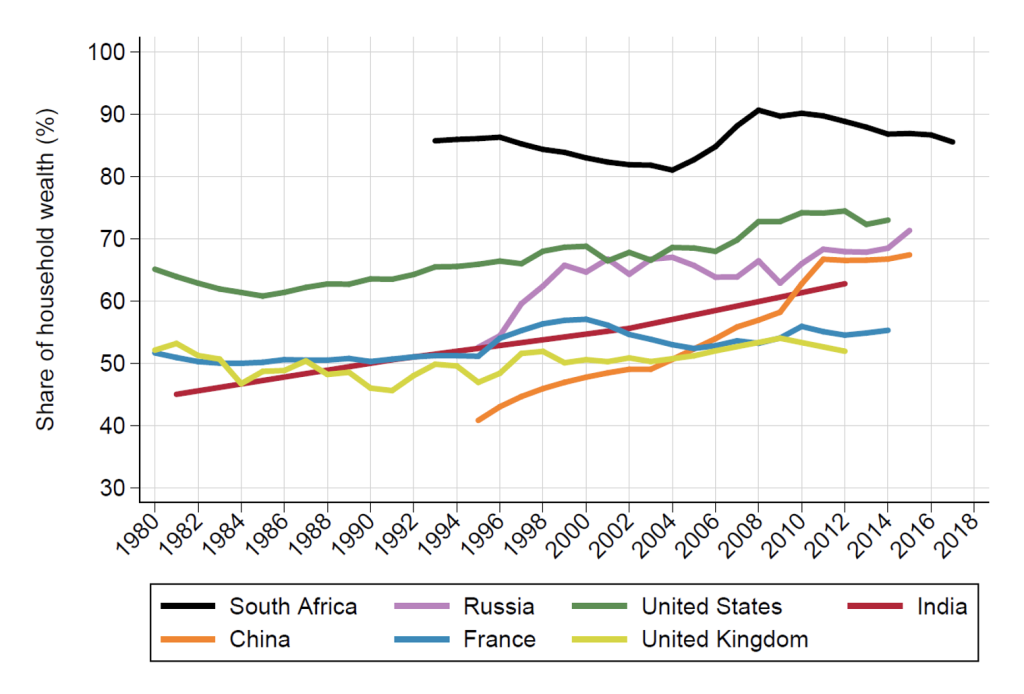
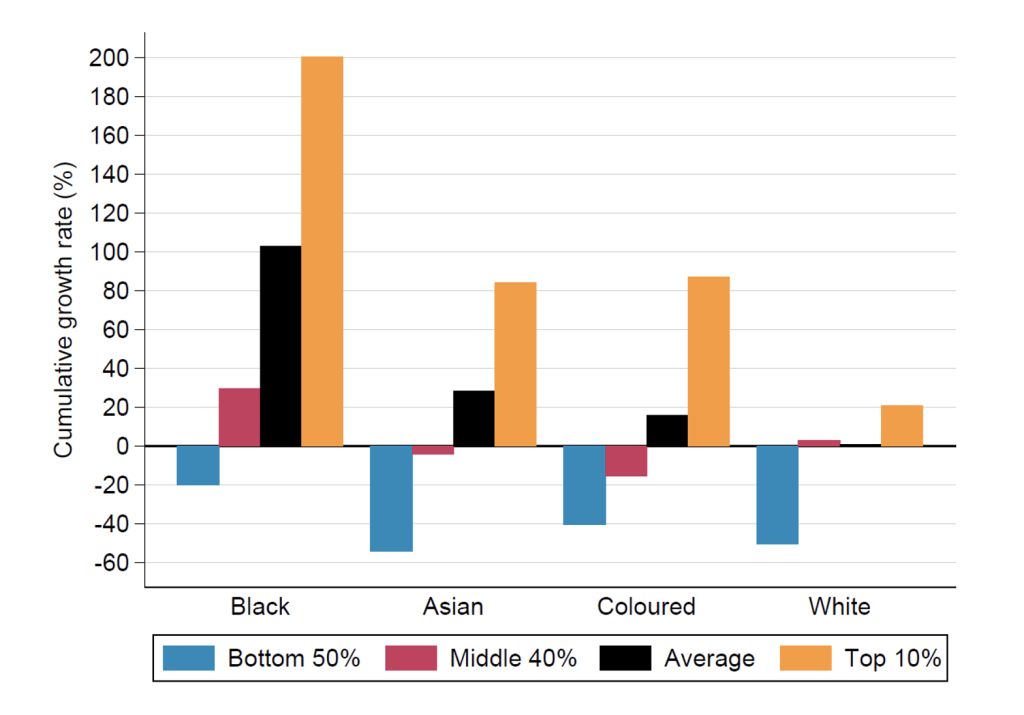
Mabeba notes that pre-1994, finance focused on mining for a minority; post-1994, while more inclusive, it still perpetuates apartheid-era inequalities. Global trends show financialization benefits the top 10% while squeezing the middle and bottom.
FSCC’s Perspective: Time for Transformation
At FSCC, this double-edged sword aligns with our 25-year mission to “Make Banks Serve the People.” Born from the 2001 Red October Campaign, we’ve achieved wins like the National Credit Regulator and fairer home auctions. But studies like Mabeba’s highlight the need for deeper change:
- Policy Advocacy: Push for regulations that prioritize inclusion over profits, like empowerment financing for SMMEs and cooperatives.
- Community Empowerment: Through education and campaigns, we can mitigate inequality by building financial literacy and alternative economies.
- De-Financialization Efforts: Support cooperative banking and de-dollarization to reduce reliance on volatile global finance.
South Africa’s financial sector, while a growth engine, must not deepen divides. As the study concludes, robust investments and inclusive environments can harness finance for equitable progress.
Join the Conversation
What are your thoughts on financialization’s role in South Africa? Share in the comments or contact us to get involved in our upcoming 2025 Consultative Conference. Together, we can ensure finance serves all.
For the full study: Financialization and Economic Growth Nexus in South Africa by Mahlatse Mabeba.
Stay tuned for more insights from FSCC.